
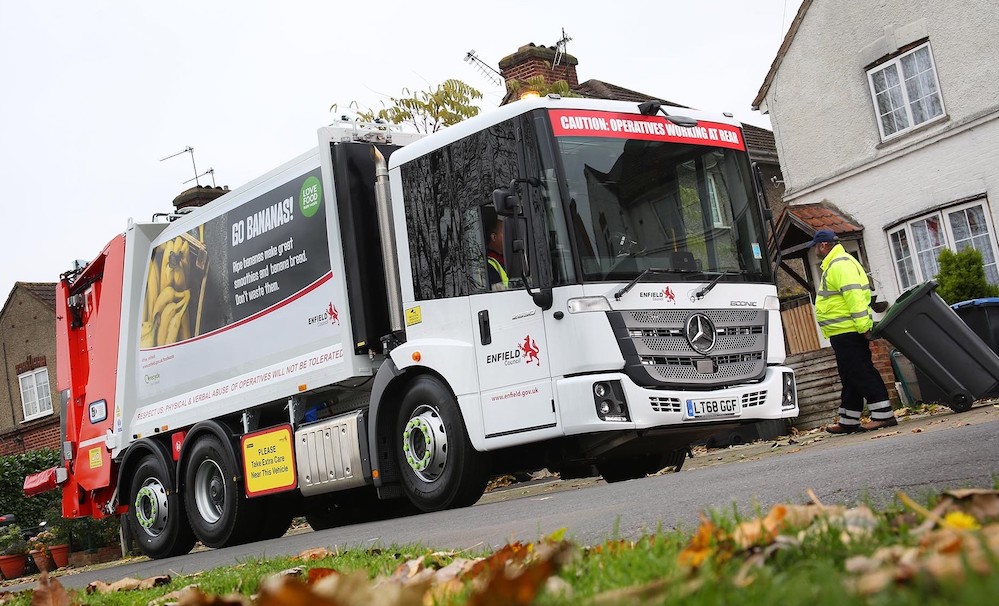
CASE STUDY: Enfield Council weighs up the benefits of MOBA technology
“The investment in MOBA’s equipment is already paying dividends. In addition to eliminating vehicle and bin damage, and the extra services we can provide customers, bin weighing is also keeping a check on the profitability of our contracts. The ability to access data that demonstrates that the cost of disposal is lower than the price of collection is extremely valuable”
Julian Minta, Head of Fleet at Enfield Council
Bin weighing technology is fast becoming a must-have requirement on waste trucks as both public and private sector collection companies appreciate the many benefits that it offers.
The scourge of overweight bins is an issue that all waste collectors are having to address. Their impact to the bottom line could be considerable without proper checks and balances but there is also the matter of the damage that they can cause to the waste vehicle’s lifting mechanisms.
“Bins that are filled above their contractual weight not only damage the bins themselves but also, more importantly, the bin lift frame, says Julian Minta”, Head of Fleet at Enfield Council. “Once a lift is attempted, the bin also invariably then ends up in the back of the truck. The consequence of all of this results in disruption of service and thousands of pounds worth of repair bills”, added Julian.
“Since we’ve been using MOBA’s dynamic bin weighing and RFID systems, however, we’ve experienced very little damage to our vehicles, or bins, from overloaded containers, resulting in substantial savings”, explains Julian.
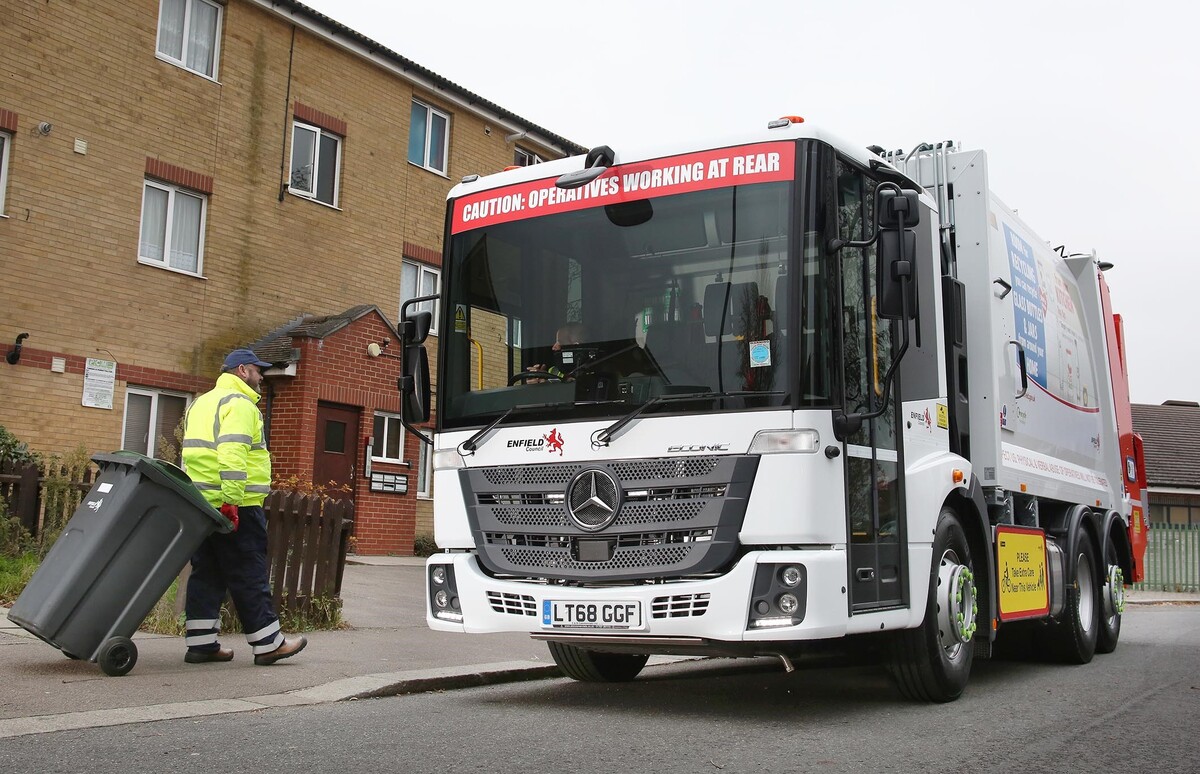

Back in 2018, when Enfield Council overhauled its domestic and commercial waste collection fleet, future-proofing was a major consideration and, in particular, a way of identifying overloaded bins.
Having comprehensively researched the market for suitable vendors, Enfield Council chose MOBA as its preferred supplier of bin weighing and RFID technology.
“Since bin lifts on our new trucks had already been prepared for weighing equipment it was very easy for MOBA to then retrofit their equipment”, says Minta.
What Enfield Council also required from MOBA was the most advanced technology currently available and a responsive service back-up.
“MOBA has access to all the data from our vehicles so they’re able to report problems back to us, sometimes before we even know that there is an issue”, says Julian.
“For example, when we ordered a new batch of commercial bins, that came pre-loaded with RFID chips, MOBA not only identified that some of these chips were faulty but sent their technicians out on our collection rounds to replace these chips as each bin was emptied”, enthused Julian.
“The back-up service is really excellent. We can immediately talk to an engineer over the phone if there are any issues and we also have regular catch up meetings with their sales team. It’s reassuring to know that there is constant hand-holding even though the equipment has already been in use for a number of years”, added Julian.
In the future, Enfield Council will also be able to exploit the wealth of data generated by MOBA’s technology for the benefit of its customers. For example, by analysing bin weight the data could help reduce the amount of residual waste thrown through a combination of better education and providing additional recycling bins. This would be particularly helpful for those customers in the hospitality sector, where a great deal of food waste and glass is generated, both of which substantially add to the overall weight of the bin. The technology will also provide the council with the added ability to charge by weight, should that be a future requirement.
“The investment in MOBA’s equipment is already paying dividends”, says Minta. “In addition to eliminating vehicle and bin damage, and the extra services we can provide customers, bin weighing is also keeping a check on the profitability of our contracts. The ability to access data that demonstrates that the cost of disposal is lower than the price of collection is extremely valuable”, he added.